The 2021 Marshall Fire proved that wildfire risk doesn’t stop at the city limits. What was once a foothills problem is now a year-round reality for homeowners in Boulder, Louisville, Lafayette, and all of Boulder County.
Modern subdivisions allow fire to move from rooftop to rooftop, turning homes into fuel and rendering traditional buffers like roads ineffective. Driven by extreme winds and parched grasslands, these fires can now rage deep into the suburbs.
With the launch of the new East County Individual Home Assessment Program, many rural homeowners are receiving professional mitigation reports for the first time. Whether your report came from this new program or a long-standing municipal inspection, the biggest question you probably have is what happens next?
As a residential contractor, Adai Construction specializes in tackling the to-dos that come from these inspections. We review your report through a builder’s lens, determining what each finding involves, what it will cost, and how to best sequence the work.
What Your Wildfire Inspection Report Is Telling You
Receiving a wildfire mitigation report can be overwhelming. While a fire inspector flags what is most vulnerable, their ranking doesn’t always account for your real-world concerns—like budgets, timelines, or the disruption to your daily life.
At Adai Construction, we view your report as a practical punch list rather than a source of stress. We specialize in helping you manage both categories of findings:
- Required items: These address direct ignition risks, such as unscreened attic vents or weathered wood decks. Completing these is essential for your certification.
- Recommended items: These are additional improvements that further reduce your risk but won’t delay your certification process.
We understand the urgency that comes with these requirements. Our team is here to handle the updates with care and expertise, making the entire mitigation process straightforward and manageable.
What Wildfire Mitigation Contractors Can Address
The most common inspection findings in Boulder-area homes tend to revolve around a handful of structural and exterior elements.
Decks
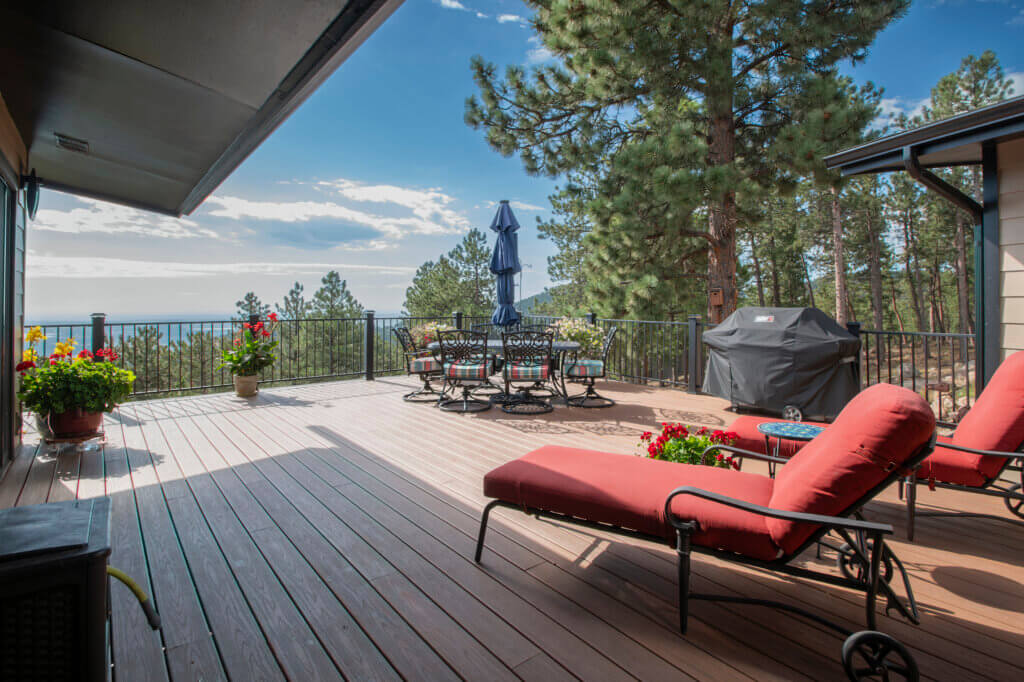
An aging wood deck is one of the most frequently flagged items in fire inspections. Untreated or deteriorating wood is highly combustible, and a deck that’s in contact with the home creates a direct ignition path. Rebuilding with fire-resistant composite decking materials is often one of the most impactful upgrades a homeowner can make.
Siding
Many Boulder homes, particularly those built in the 1960s and 70s, still have original cedar lap siding. Those 1960s cedar laps look great, but in a wildfire, they’re essentially kindling attached to your house. Replacing it with fiber cement or another fire-rated cladding material significantly changes how the exterior of your home responds to radiant heat and embers.
Roofing
Cedar shake roofs are beautiful, and they’re also among the riskiest materials a home can have in a wildfire zone. Older homes across Boulder County still have them. Re-roofing with Class A fire-rated materials is a significant investment, but it’s often one of the highest-priority items on an inspection report.
Attic Vents and Soffits
Embers don’t need a wall of flames to destroy a home; they just need an opening. Most home ignitions occur when embers are pulled into unscreened attic vents. Retrofitting with ember-resistant covers is a high-impact, low-cost fix that closes the most vulnerable entry points into your home’s structure.
Defensible Space and Gravel Zones
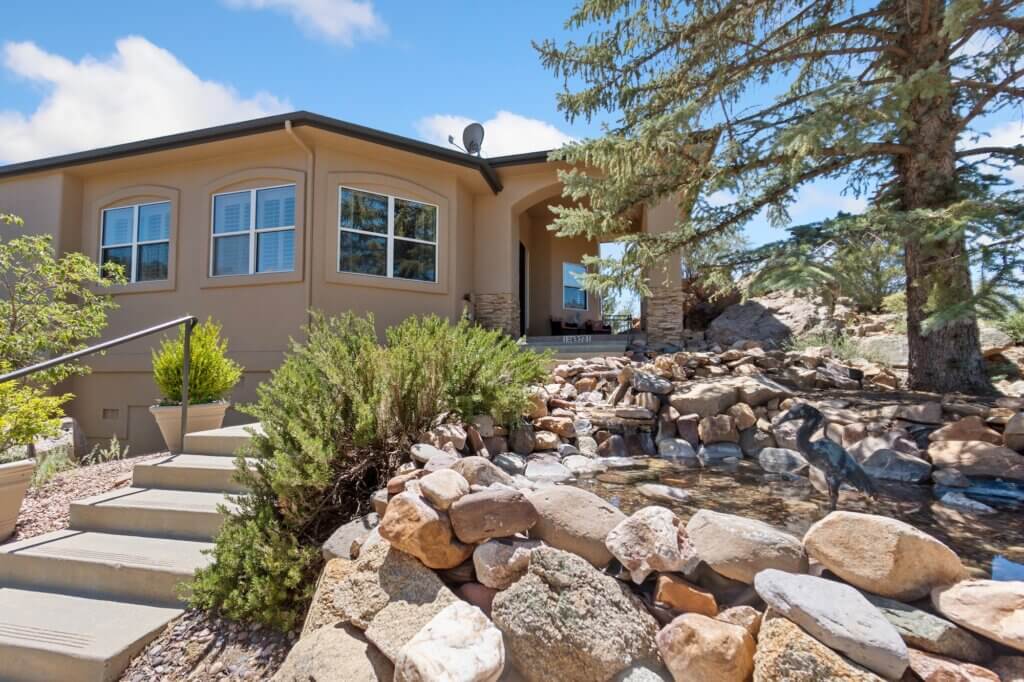
For homes surrounded by tall grass or dry plantings, one of the most effective mitigations is removing combustible ground cover close to the foundation and replacing it with a gravel apron. Adai can design and build out gravel zones that wrap the perimeter of your home, creating a non-combustible buffer between the structure and the landscape.
Firewood and Debris Storage
A cord of firewood stacked against the foundation is a common finding. We can build proper detached storage structures and help move fuel sources away from the home.
For scope that falls outside traditional construction—tree removal, larger-scale vegetation management—Adai works with trusted subcontractors and partners who specialize in that work. We coordinate the full project so you have one point of contact and a single plan moving forward.
Haven't Had an Inspection Yet? Here's Where to Start

If you haven’t received an assessment yet, the Wildfire Partners program is the best place to start. They provide the prioritized roadmap we use to build your mitigation estimate.
It’s also important to note that many Boulder County building permits now require wildfire mitigation as a condition of approval. We recommend reviewing these requirements early in your planning phase. Adai Construction can review your project scope alongside these mandates to ensure your mitigation work is folded into your timeline seamlessly, preventing surprises during the permitting process.
Protecting What You've Built
A 20-page mitigation report is a lot to digest. It’s easy to get stuck on the list of items without knowing where the first hammer swing should happen. Our job is to take that list and turn it into a practical construction schedule.
Adai Construction has been working on Boulder-area homes since 2009. We bring the same craftsmanship and care to wildfire mitigation work that we bring to every project, from full kitchen remodels to home repairs.
Reach out today to schedule a call. We’ll take your prioritized assessment, walk the property with you, and provide a clear estimate so you know exactly what it will take to make your home less susceptible to fires.