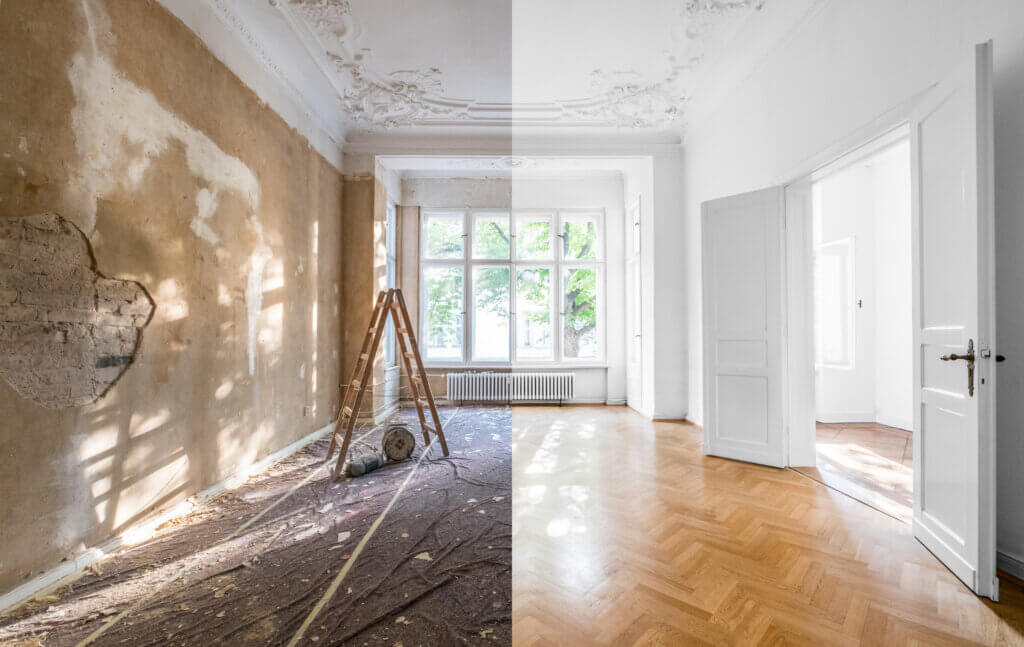
You’ve been white-knuckling it as long as possible: a kitchen layout that’s always getting in your way or a bathroom straight out of a different decade. At some point, fixing things one by one no longer makes sense, and a complete remodel is your most practical option.
If you’re ready to start fresh and remodel your entire home, here’s a practical, step-by-step look at what a whole-house remodel looks like from start to finish.
Phase 1: Design and Planning

Before any walls come down, there’s a lot of groundwork to cover. You’ll sit down for design consultations and work through architectural drawings together. Material selections run alongside that process, with each choice shaping both the budget and the finished look.
Many homeowners underestimate how long the planning phase takes, but you’ll be thankful you didn’t rush it. Moving a kitchen island on a blueprint is free; moving it after plumbing and drywall are in costs time and money. A quality builder will help you assess the budget trade-offs, making sure there are no surprises when the crew starts working.
At Adai, we’re involved in the design conversation from the start of the project. The person drawing up your scope is the same person managing the build, so what they plan is what they build.
Phase 2: Permits and Approvals
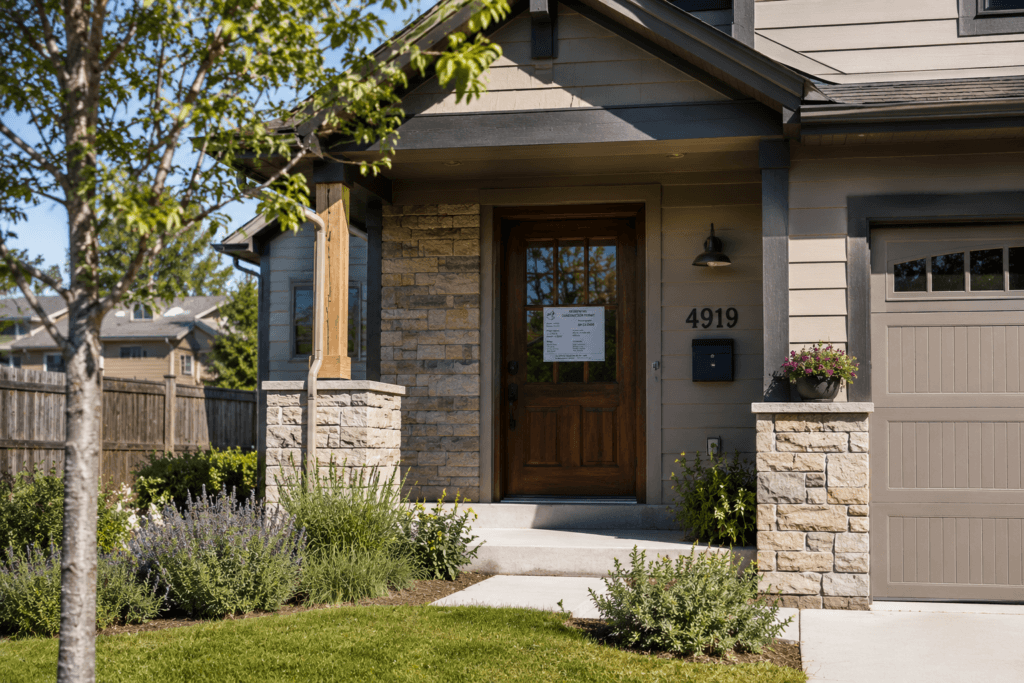
A whole house remodel in Boulder touches nearly every building system, which means you need multiple permits with their own inspection timelines. The City of Boulder also has specific requirements around energy efficiency and egress that vary by the age and configuration of the home.
A Boulder home remodeling contractor who knows this process can sequence the work so inspections flow with the build schedule. Local permit timelines typically run two to six weeks, depending on scope. Applying early is one of the most effective ways to keep your project on schedule.
Phase 3: Demolition and Rough Work
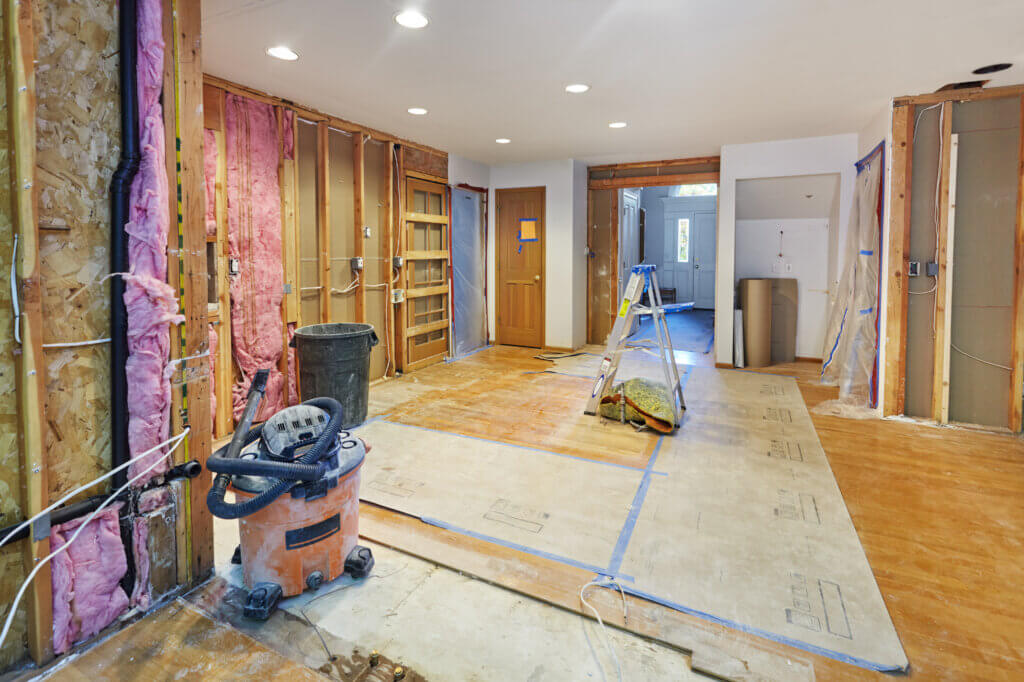
Demo day is satisfying to watch, but the real work starts the moment the walls open. During the rough-in phase, the hidden infrastructure of your home gets rebuilt. Electricians run new circuits sized for the updated layout. Plumbers reposition supply lines, and HVAC crews reconfigure ductwork so the space heats and cools the way it should.
In our area, opening up the walls of homes built between the 1950s and 1970s almost always reveals a few surprises. It’s common to uncover outdated wiring, cast-iron drain lines near the end of their lifespan, or insulation no one’s touched in 50 years. Since we expect these discoveries, we build contingencies into the budget and schedule. When a surprise pops up, it’s just a line item we check off.
If your new layout involves structural changes, like opening up a floor plan, this is also when the framing happens. But remember, moving a load-bearing wall requires structural reviews and beam calculations long before the sledgehammers come out.
Phase 4: Finishes and Completion
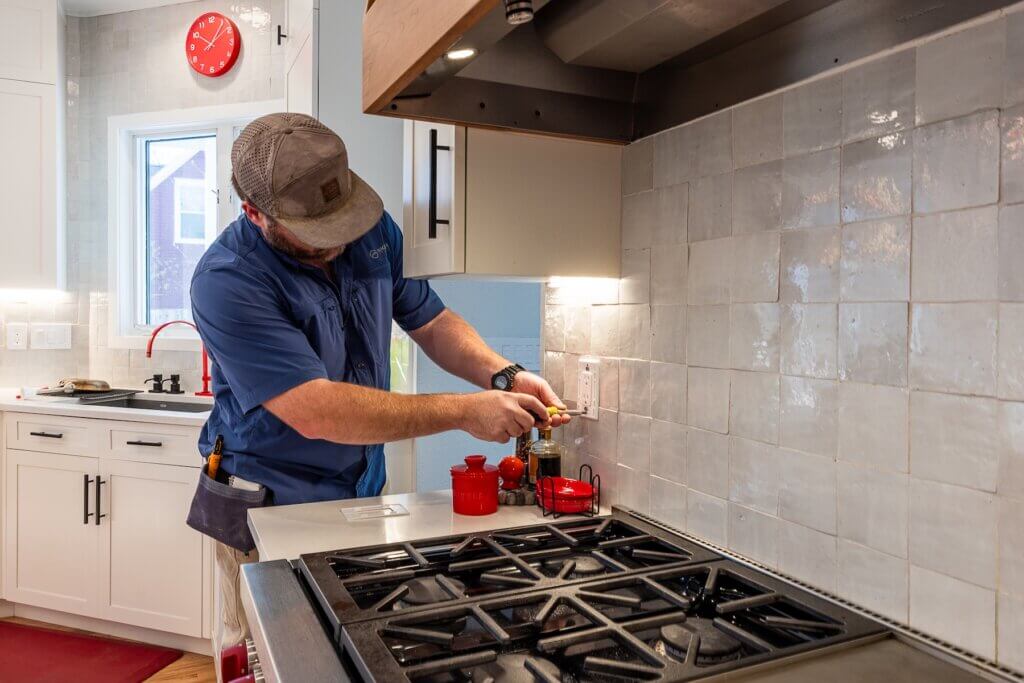
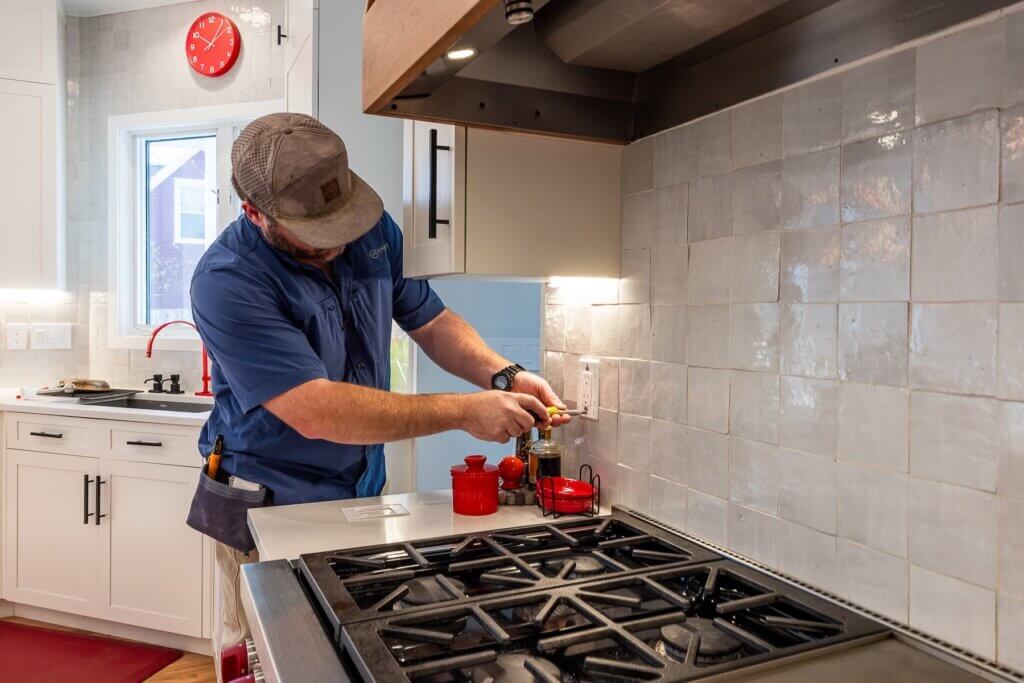
Once the rough-ins pass inspection, the project transitions into drywall and finishes. Drywall goes up first, followed by flooring, cabinetry, and tile work. Then, trim and plumbing fixtures round out the details. While this phase requires a lot of meticulous, slow-moving craftsmanship, it’s easily the most rewarding.
The final weeks of a major remodel can feel a bit strange—both fast-moving and painstakingly slow. You’ll be coordinating dozens of micro-decisions, from trim profiles to cabinet hardware, and the crew will need quick answers to keep moving. Staying connected with your contractor during this final stretch will ensure your project finishes smoothly and on time.
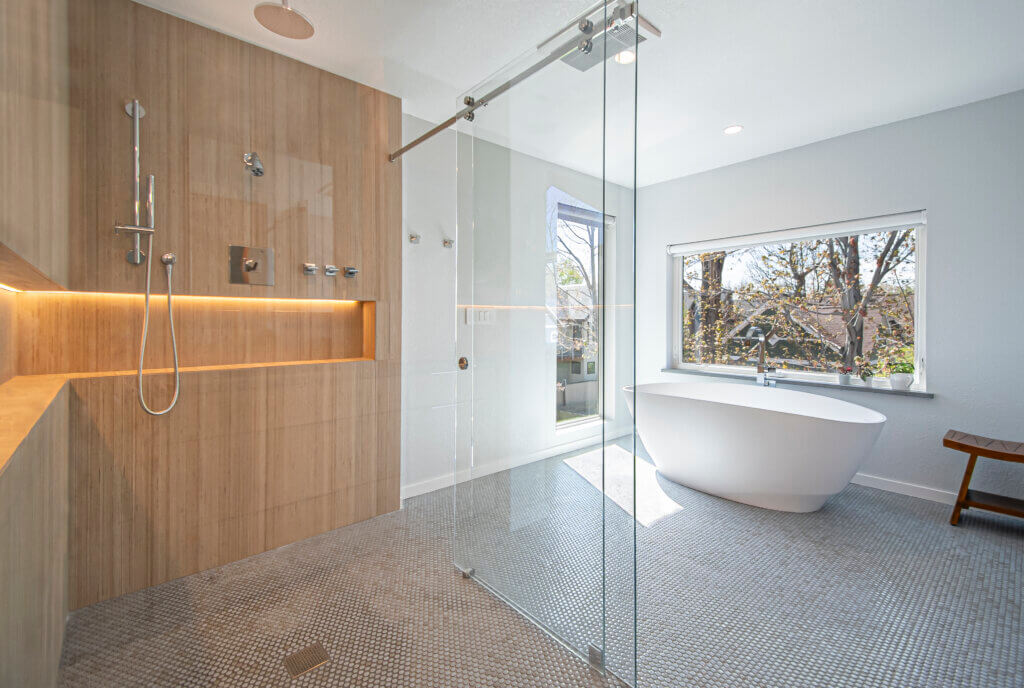
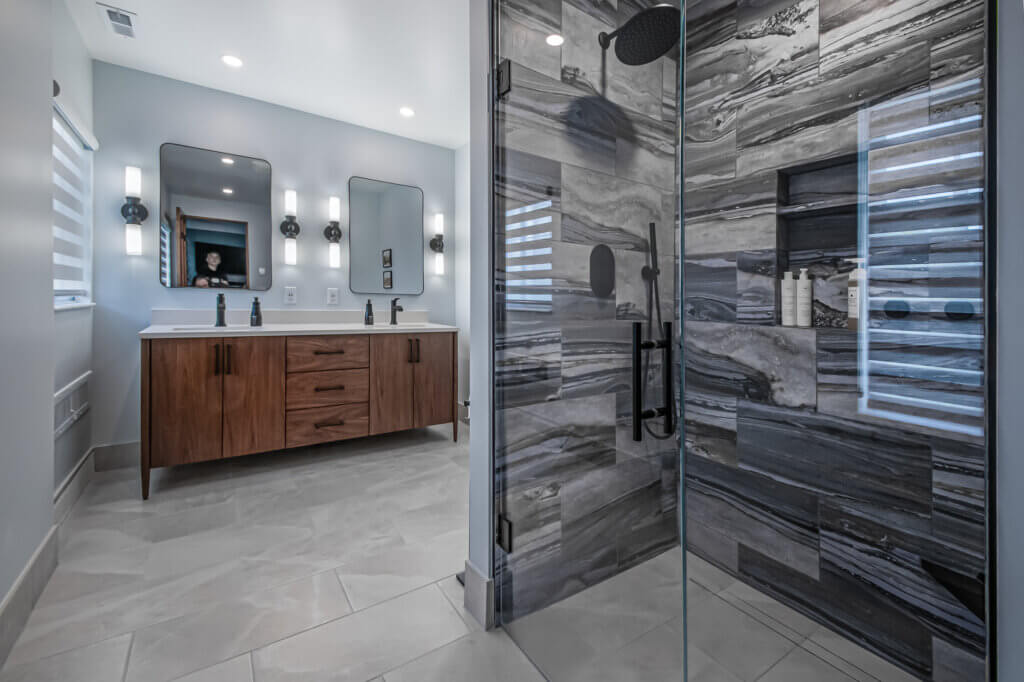
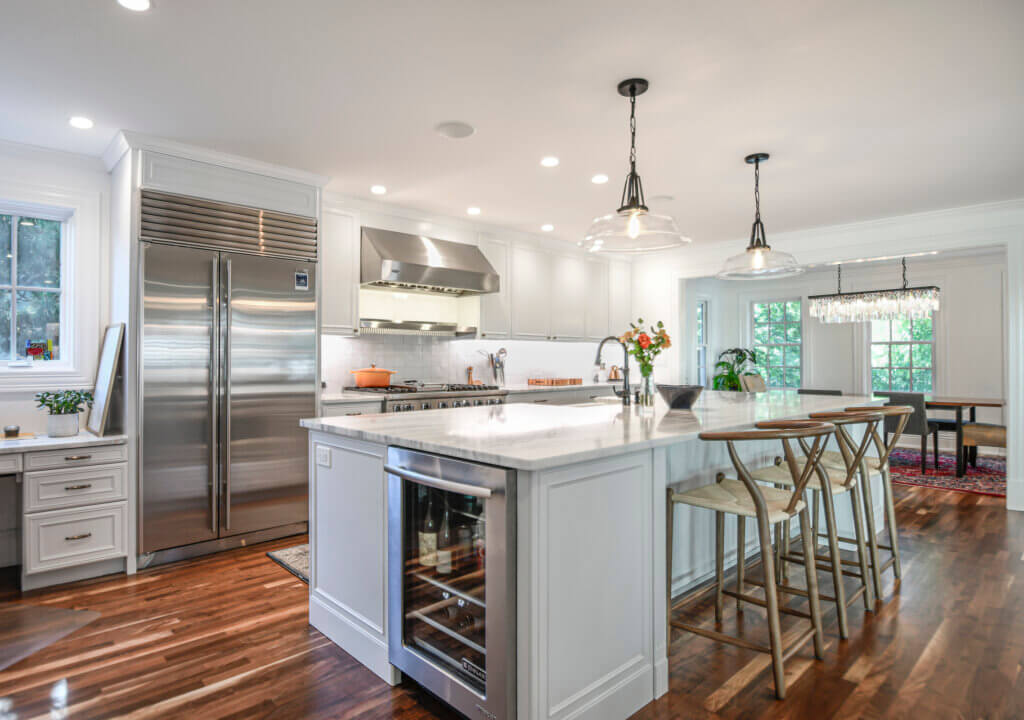
Imagining the possibilities? Check out what a completed whole house remodel looks like.
How Long Does a Full Home Remodel in Boulder Take?
A whole-house remodel in Boulder typically takes anywhere from four to nine months, depending on the scope. For example, a complete gut-job and layout change on a 1,500-square-foot home will often take longer than a 2,000-square-foot remodel where the structural walls stay intact.
But when homeowners put off decisions until the last minute, timelines start to fall apart. We see it all the time: fixtures get picked out but not ordered, leaving a crew sitting around waiting for a delivery. Or local permit reviews catch everyone off guard because of lengthy city processing times.
Most of these factors are completely avoidable. A well-run project identifies those long-lead items during the initial planning phase, forcing the tough decisions out of the way first.
Should You Move Out During the Remodel?
For a true whole-house remodel—one that touches every single room—moving out is almost always the best choice for your sanity. Construction noise and dust are a daily reality, and you’ll have to do without utilities at some point. Plus, the crew can work much faster when they have unimpeded access to the entire space.
That said, staying put can sometimes work. If contractors sequence the project by zone, you’ll always have a functional ‘safe zone’ as long as you’re willing to live with a layer of drywall dust and early-morning hammers. But it’s a logistical question you’ll want to ask your contractor—the answer depends on your project and schedule.
How to Set Yourself Up for a Smooth Project
A few tips for simplifying your whole house remodel:
- Make decisions early. Resolving material selection and finish choices before your crew needs the answer keeps the project moving. If you put off making decisions, you can almost always expect a longer timeline.
- Budget for contingency. A 10-15% contingency on top of the project estimate is standard practice, especially for older Boulder homes. That buffer keeps the project moving if something unexpected turns up inside a wall.
- Communicate clearly and promptly. A whole house remodel is a months-long working relationship. Homeowners who stay in regular contact with the project manager and respond quickly when questions come up finish with the fewest regrets. Be sure to flag concerns before small issues turn into larger ones.
Ready to Make Your Space More Livable?
Explore our whole house remodel services to learn more about our project approach, or reach out and tell us about your project.